Core Parameters
Fire Resistance Grade:
Divided into three levels – Grade A, Grade B, and Grade C, which is the most crucial performance indicator.
Grade A
Fire integrity ≥ 1.5 hours, fire insulation ≥ 1.5 hours, suitable for fire compartment walls, firewalls, and other critical locations.
Grade B
Fire integrity ≥ 1.0 hour, fire insulation ≥ 1.0 hour, commonly used in stairwells, anterooms, corridors, and other areas.
Grade C
Fire integrity ≥ 0.5 hour, fire insulation ≥ 0.5 hour, often used as doors for pipe shafts, cable shafts, and other vertical shafts.
Other Parameters
Dimension Specifications
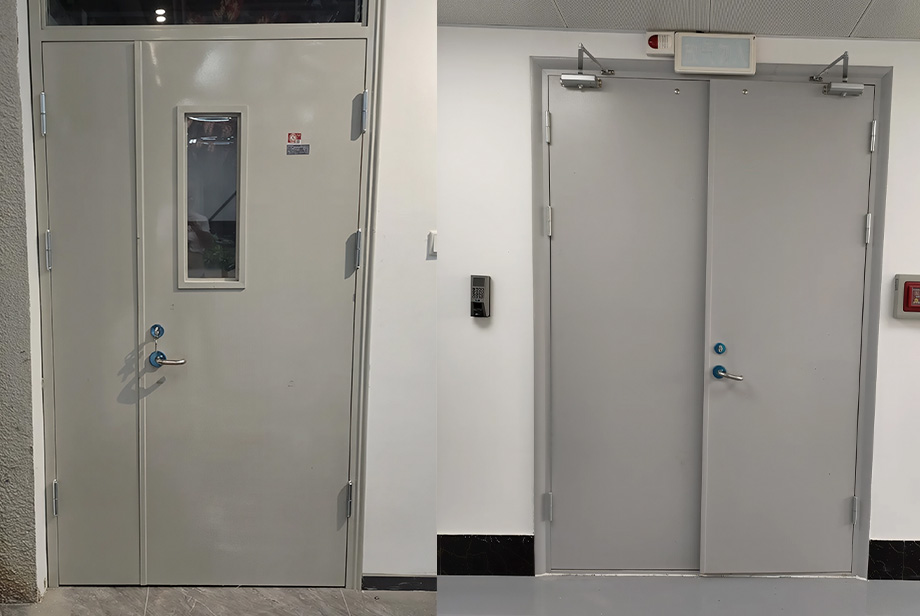
The width of a single door is usually ≤ 1000mm, and the height ≤ 2300mm; the width of a double door ≤ 2100mm, and the height ≤ 2300mm. Doors exceeding these specifications need to be custom-made and undergo additional testing.
Door Leaf Thickness
The thickness of Grade A fireproof door leaves is generally 50-55mm, Grade B is 45-50mm, and Grade C is 40-45mm. Thickness directly affects fire resistance performance.
Opening Direction
All are designed for one-way evacuation opening (opening in the direction of evacuation), and two-way opening is strictly prohibited to ensure that people can quickly push open the door to escape in case of fire.
Material Characteristics
Door Leaf and Frame
Base Material
The mainstream is cold-rolled steel plate (thickness 0.8-1.2mm), with a surface treated by electrostatic powder coating for rust prevention and easy cleaning; wooden fireproof doors must use flame-retardant wood (treated with flame retardant), and the wood moisture content ≤ 12%.
Filling Material
Must be non-combustible materials, commonly including perlite fireproof boards, rock wool, and silica-alumina cotton, etc. The filling density of Grade A doors is higher (such as perlite board density ≥ 240kg/m³) to ensure insulation.
Seals
Fireproof expansion seals (made of graphite or expanded vermiculite) must be installed at the gap between the door leaf and the frame. When exposed to fire (≥ 150℃), they will rapidly expand to seal the gap and prevent smoke penetration.
Windows (if any)
Must use fireproof glass (such as single-pane potassium-cs glass), with a fire resistance grade matching the door, a thickness ≥ 5mm, and flush with the door leaf, without protrusion or depression.
Hardware Characteristics
All hardware for fireproof doors must be fireproof-specific components and cannot use ordinary civilian hardware. The core component features are as follows
Hinges
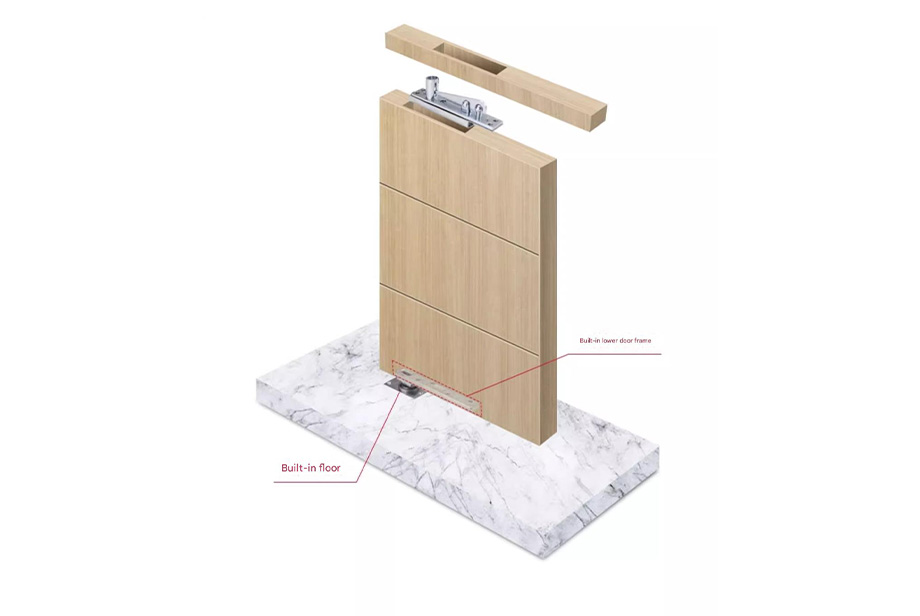
Made of 304 stainless steel or galvanized steel plate, with a load-bearing capacity ≥ 80kg, opening times ≥ 100,000 times, and bearings that can withstand high temperatures (≥ 800℃), ensuring they do not fail due to high temperatures in case of fire.
Locks
Must be fireproof locks with emergency opening functions (such as push-bar fireproof locks, handle fireproof locks), with lock cores and lock bodies made of high-temperature resistant materials, maintaining a locked state during a fire and allowing quick opening from the inside.
Door Closers
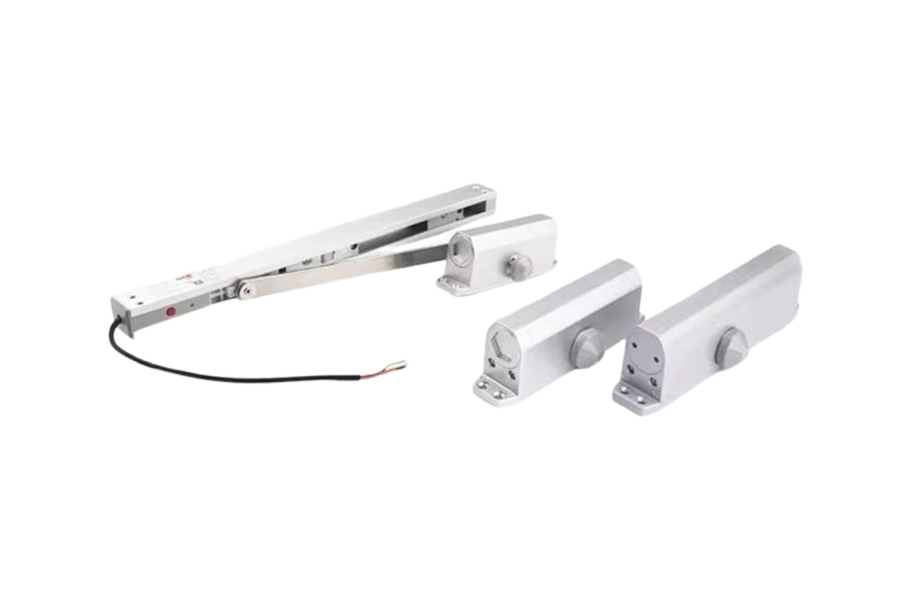
Standard equipped with fireproof door closers (hydraulic type), which can automatically close the door leaf, with adjustable closing speed (typically slow from 15°-90° and fast from 0°-15°), and can withstand high temperatures (≥ 200℃), ensuring no oil leakage or failure in case of fire.
Sequencers (for double doors)
Control the closing sequence of double doors (close the secondary door first, then the main door), ensuring the door gaps align and seal tightly. Made of stainless steel, with fire resistance performance matching the door.