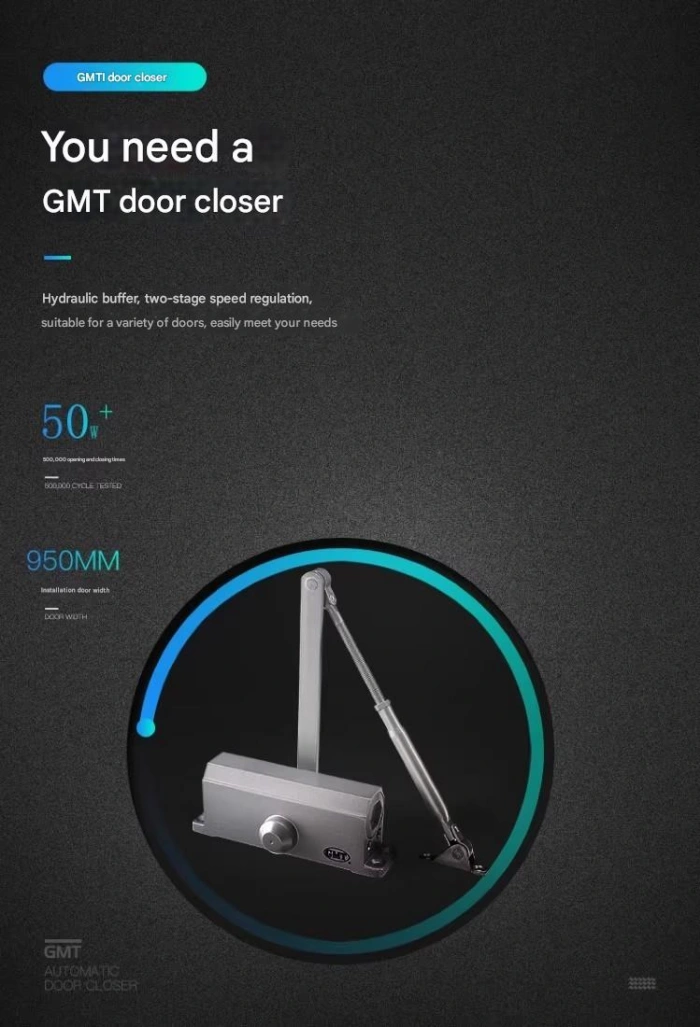
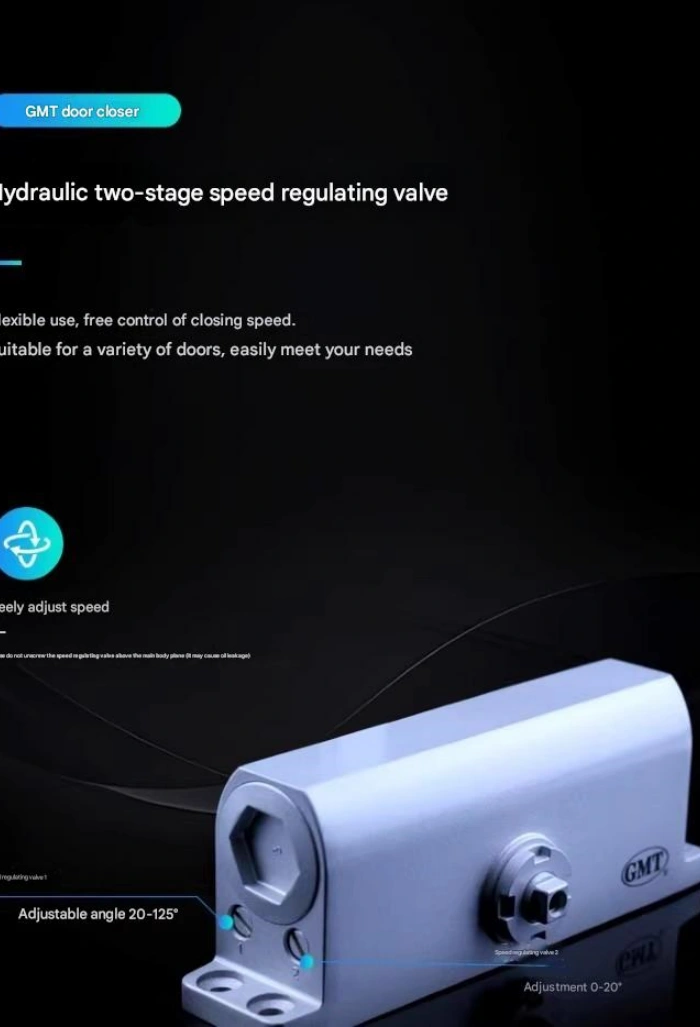
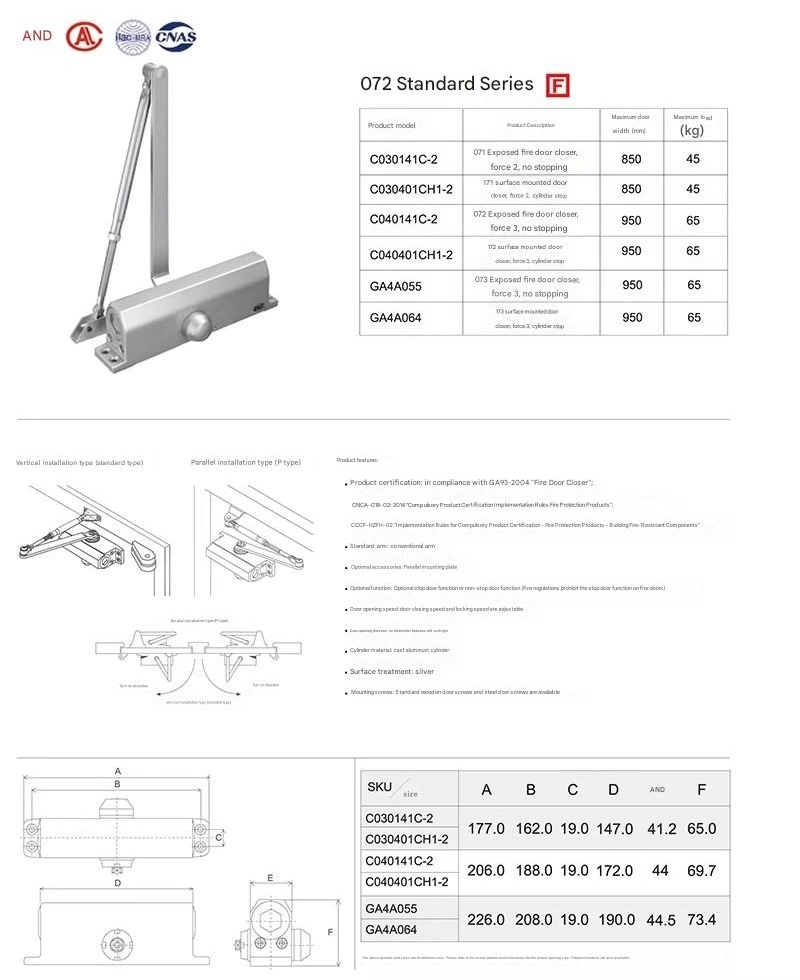
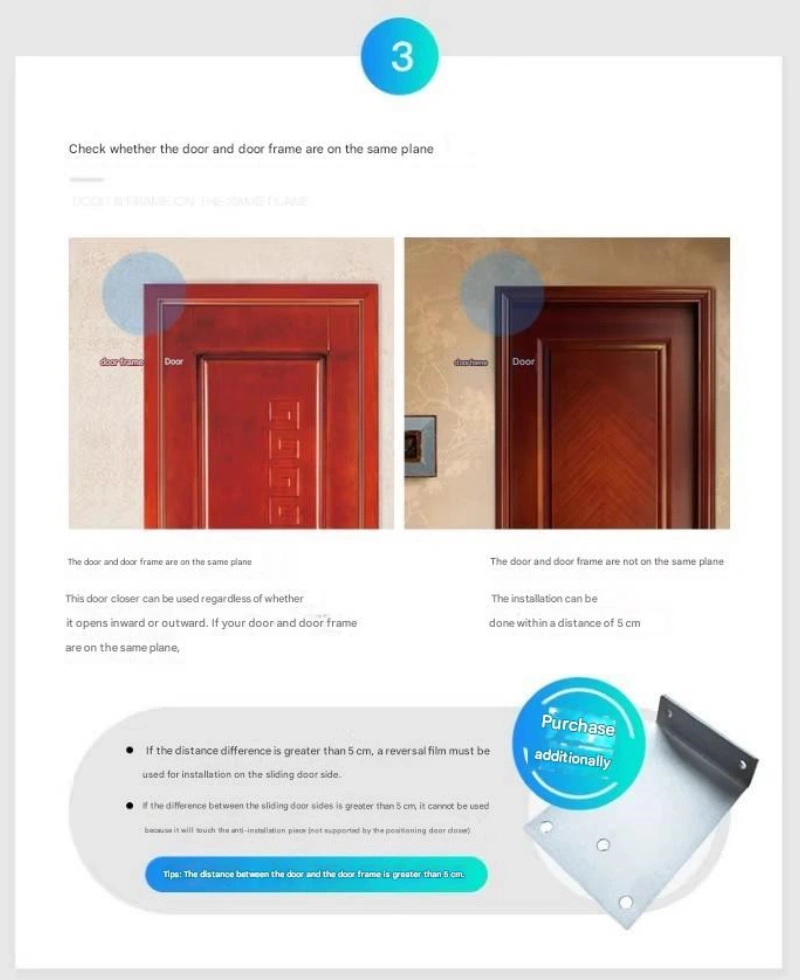
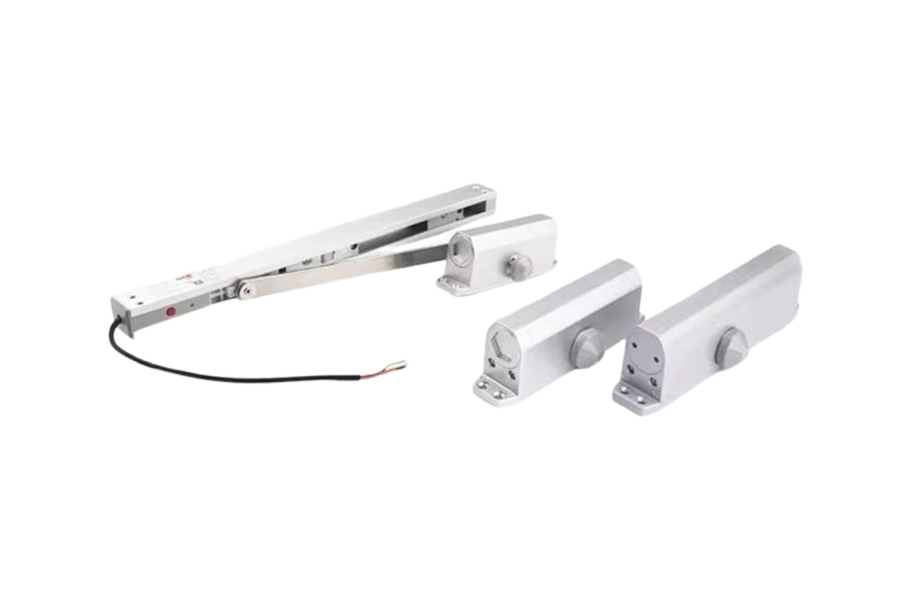
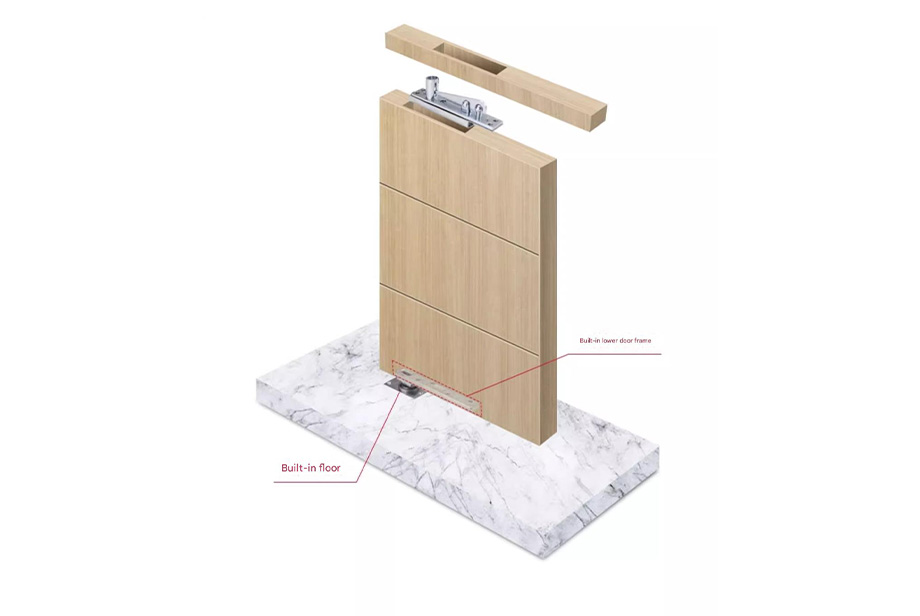
As a mechanical device that controls the closing process of doors, door closers are widely used in residential, commercial buildings, public facilities and other scenarios. Their core value lies in three dimensions: safety protection, functional adaptation, and extending the lifespan of doors. The specific benefits can be broken down into the following categories:
Core advantages: Ensuring safety and reducing risks
Safety is the most crucial function of door closers. They can prevent potential dangers in multiple scenarios, especially in places with high foot traffic or special safety requirements (such as hotels, hospitals, office buildings, and residential buildings):
Automatic closing, blocking the spread of danger
In case of fire
If a door is left open, it can become a channel for the “chimney effect”, accelerating the spread of smoke and flames. Door closers can automatically close open doors, creating fire compartments, buying time for evacuation, and reducing the spread of fire across areas (when used with fire doors, they meet fire protection regulations).
Anti-theft
After daily entry and exit, door closers can prevent doors from being “half-open”, reducing the risk of theft through doors that are not fully closed. Some models with “delayed closing” functions are convenient for passing through while carrying items and ensure the door is eventually closed tightly.
Buffered closing, avoiding collision injuries
If traditional manual closing is too forceful, it can cause the door to hit the door frame with a loud noise and may injure the hands or feet of the elderly, children, or pets. Door closers control the closing speed through hydraulic or pneumatic structures (usually “fast at the beginning and slow at the end”), avoiding rapid impacts, especially protecting children and people with mobility issues in the family.
Functional adaptation:
Enhancing convenience and environmental adaptability
The design of door closers can be adjusted according to different scenario requirements, solving many problems of traditional manual closing:
Adapting to complex usage scenarios
Public areas (such as office buildings, shopping malls)
With frequent foot traffic, manual closing often leads to “forgetting to close” the door. Door closers can achieve “close upon passage”, maintaining indoor temperature (air-conditioned or heated rooms), and reducing the entry of outdoor dust and noise.
Special needs of certain groups
In places like hospital wards and nursing homes, door closers with “slow closing” and “pause positioning” functions (supported by some models) can prevent doors from obstructing passage, enhancing barrier-free usage experience. Stable control, unaffected by external forces
Outdoor doors or high-rise corridor doors
Easily affected by wind, manual closing may be inconvenient due to “wind blowing the door open” or “wind accelerating the closing”. Door closers can balance wind forces, ensuring the door closes at a preset speed smoothly, avoiding repeated impacts due to wind.
Protecting the door:
Extending lifespan and reducing maintenance costs
Poor-quality doors or frequent improper use (such as slamming the door) can cause door hinges to loosen, door frames to deform, and door locks to break. Door closers can protect door components through “buffering + stability”:
Reducing mechanical wear
he buffering force during closing can prevent hard impacts between the door and the door frame or hinges, reducing the wear rate of door hinges and locks, and extending the lifespan of the door and hardware.
Reducing maintenance frequency
Especially for materials prone to deformation due to impact, such as solid wood doors and composite doors, door closers can reduce problems like door cracking and door frame loosening, indirectly reducing later maintenance costs.
Additional value:
Meeting regulations and enhancing experience
Sliding Doors/Sliding Lift Doors
Compliance with building codes
According to requirements such as the “Building Design Fire Protection Code”, doors in evacuation stairwells and fire compartments need to have a “normally closed” function. Door closers are the core devices to achieve this requirement, ensuring compliance with building fire protection acceptance.
Enhancing living / working quality
High-quality door closers close silently and smoothly, avoiding the “clanging” sound of traditional manual closing, creating a quieter and more comfortable environment (such as hotel rooms, libraries, bedrooms). In conclusion, the door closer is not merely an “automatic door-closing tool”, but an important device that takes into account safety protection, functional adaptation, cost control, and compliance with regulations. Different scenarios (such as homes, businesses, and public facilities) can further optimize the user experience by choosing different types of door closers (such as hydraulic, pneumatic, or concealed types).